
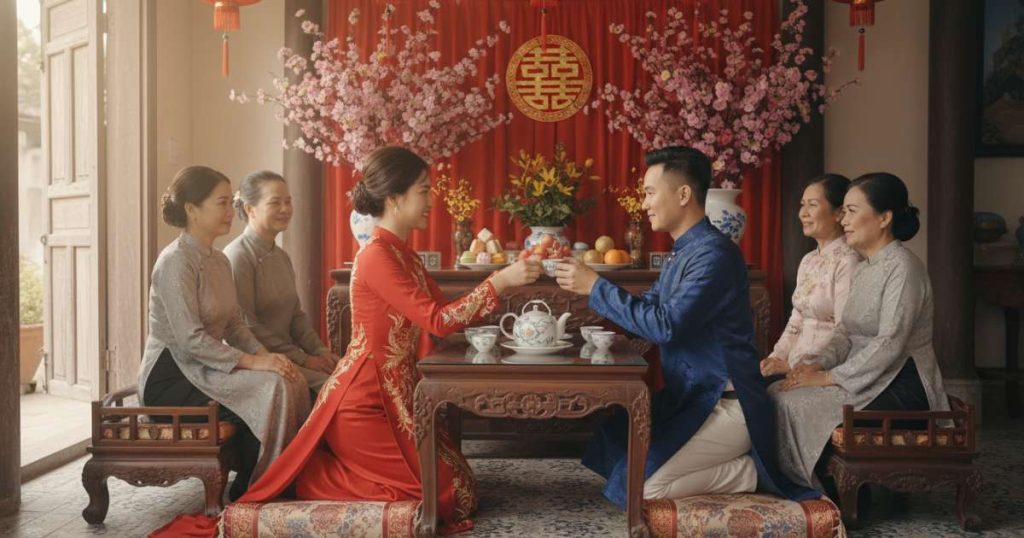
The cultural landscape of Vietnam is rich with traditions that have survived for centuries, and among the most significant is the union of two families through marriage. When people ask what is a Vietnamese wedding tea ceremony, they are seeking to understand a ritual that serves as the formal announcement of a couple’s commitment. This ceremony is not just a simple gathering but a profound act of respect toward ancestors and elders. It marks the moment when the groom’s family officially asks for the bride’s hand in marriage and when the bride is welcomed into her new home. Unlike Western weddings that focus heavily on the exchange of vows at an altar in a church or a garden, the Vietnamese version centers on the home and the family lineage.
To truly grasp what is a Vietnamese wedding tea ceremony, one must look at it as a bridge between the past and the future. In Vietnamese culture, marriage is seen as the joining of two entire families rather than just two individuals. The tea ceremony, often referred to as Le Dam Hoi or Le Ruoc Dau depending on the specific stage of the wedding process, is the primary vehicle for this social and spiritual connection. It is a time-honored practice where tea and wine are offered to the spirits of the ancestors to seek their blessing for the new couple. The atmosphere is usually intimate, filled with the scent of incense and the vibrant colors of traditional decorations.
The historical context of what is a Vietnamese wedding tea ceremony
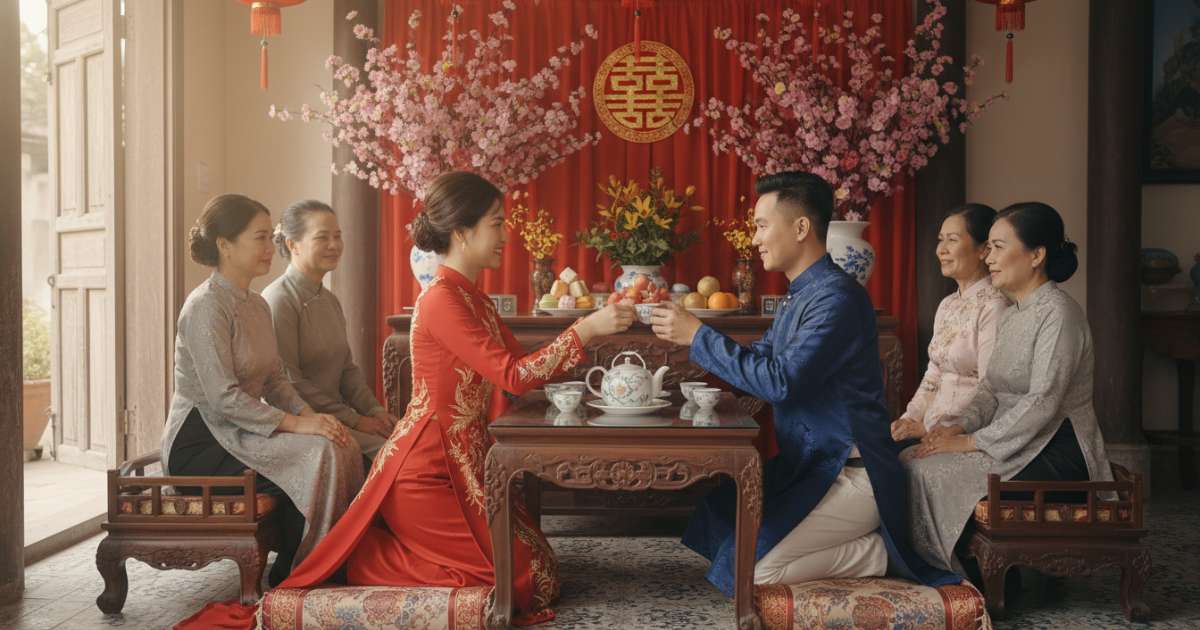
Historically, Vietnamese society was deeply rooted in Confucian values, which emphasized filial piety and respect for social hierarchy. Understanding what is a Vietnamese wedding tea ceremony requires a look back at these ancient foundations. In the past, weddings were complex affairs that could last several days and involve multiple stages of negotiation between families. The tea ceremony was the most critical part of these negotiations. It was the formal legal and social proof of the marriage before modern administrative systems existed. When the groom’s family brought gifts to the bride’s house, they were demonstrating their ability to provide for her and their respect for her upbringing.
The Vietnamese wedding traditions associated with the tea ceremony have evolved, but the core essence remains the same. In ancient times, the ceremony was a way to ensure that the union was compatible and that both families were in agreement. Today, while many couples choose their own partners, they still perform the ceremony to honor their parents and grandparents. This ritual ensures that the younger generation does not forget their roots. The significance of Vietnamese tea ceremony rituals lies in the preservation of identity. Even for Vietnamese families living abroad, performing this ceremony is a way to stay connected to their heritage and pass down cultural values to their children.
Furthermore, the ceremony serves as a public declaration of the couple’s new status. By serving tea to their elders, the bride and groom acknowledge the wisdom and sacrifices of those who came before them. This act of humility is a cornerstone of Vietnamese wedding traditions. It reinforces the idea that a successful marriage is supported by the strength of the extended family. As we explore what is a Vietnamese wedding tea ceremony further, it becomes clear that every gesture, from the way the tea is poured to the order in which guests are served, carries deep symbolic meaning intended to bring luck and harmony to the marriage.
Key rituals within the Vietnamese wedding tea ceremony rituals
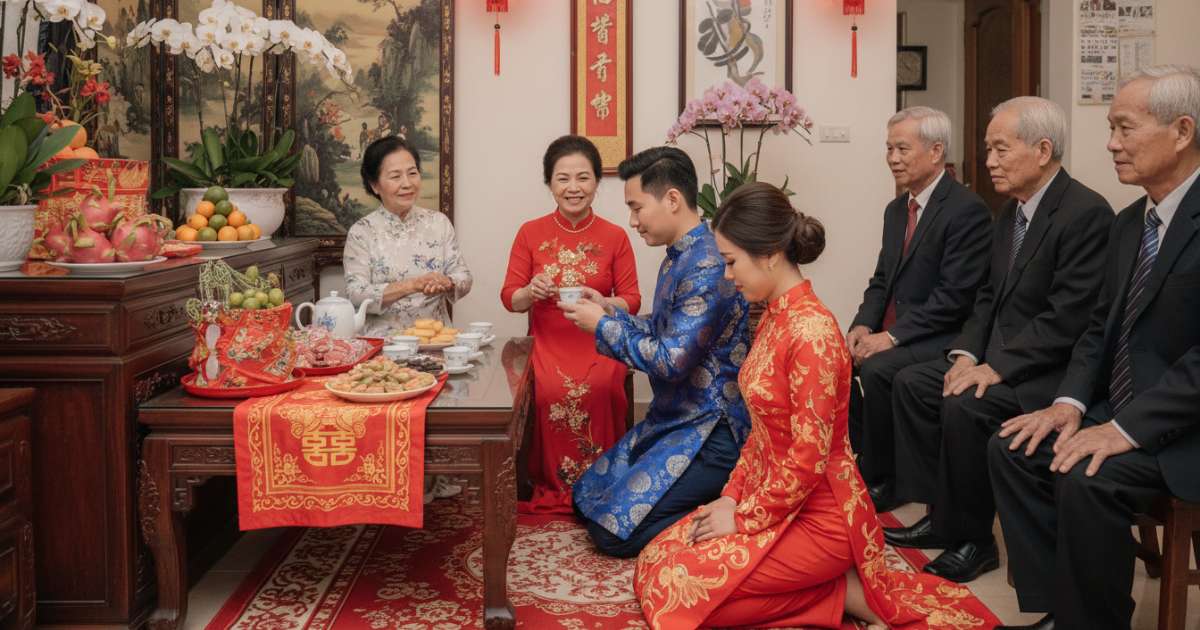
The sequence of events in a traditional ceremony is carefully orchestrated. To understand what is a Vietnamese wedding tea ceremony in practice, we must look at the specific Vietnamese wedding tea ceremony rituals that take place on the day of the wedding. The day typically begins at the groom’s house, where his family prepares the gift trays, known as Mam Qua. These trays are covered with red cloth and carried by young, unmarried men. The procession then travels to the bride’s house, where they are met by a corresponding group of young, unmarried women representing the bride’s family. This exchange of gifts is the first major ritual of the day.
Once the groom’s family is invited inside, the formal Vietnamese wedding tea ceremony rituals begin. The representative of the groom’s family will introduce their members and state the purpose of their visit. The bride’s family representative then accepts the gifts and introduces their family members. This formal introduction is crucial because it establishes the hierarchy and relationship between the two clans. After the introductions, the bride makes her grand entrance, usually escorted by her mother or a female elder. This is often an emotional moment, as it symbolizes the bride’s transition from her childhood home to her new life.
The most sacred part of what is a Vietnamese wedding tea ceremony happens at the ancestral altar. The couple lights incense and candles, bowing to their ancestors to inform them of the marriage and to ask for protection and happiness. Following this, the couple serves tea or wine to their parents and elders. In return, the elders give the couple advice on marriage and present them with wedding tea ceremony gifts such as jewelry or red envelopes containing money. This exchange is a physical manifestation of the support system the couple will have. The Vietnamese wedding tea ceremony rituals conclude with a feast where both families share a meal, solidifying their new bond through the act of eating together.
The role of the Master of Ceremonies
In many ceremonies, a Master of Ceremonies or a family representative plays a vital role. This person is usually an elder who is well-versed in Vietnamese wedding traditions and possesses good speaking skills. They ensure that the Vietnamese wedding tea ceremony rituals are followed correctly and that the tone remains respectful and auspicious. Their role is to facilitate the dialogue between the two families, making sure that everyone is properly introduced and that the symbolic meanings of the gifts are explained. This ensures that the significance of Vietnamese tea ceremony traditions is understood by all attendees, including the younger generation.
The symbolic act of serving tea
Serving tea is the namesake of the ceremony and holds the most weight. When the couple offers tea, they must use both hands as a sign of utmost respect. The order of service is also strict, starting from the highest-ranking elders, such as grandparents, followed by parents, and then aunts and uncles. This part of what is a Vietnamese wedding tea ceremony teaches the couple about the importance of social order and gratitude. The tea itself symbolizes purity and the beginning of a fresh chapter. By drinking the tea, the elders signify their acceptance of the marriage and their blessing for the couple’s future together.
Significance of the wedding tea ceremony gifts and offerings
The gifts brought by the groom’s family are not random items; they are highly symbolic offerings intended to bring prosperity and fertility to the couple. When discussing what is a Vietnamese wedding tea ceremony, one cannot ignore the importance of the Mam Qua. Traditionally, there are an even number of gift trays, usually six or eight, as even numbers are considered lucky in Vietnamese culture. Each tray contains a specific item that represents a different wish for the couple’s future. The most essential gift is the betel leaves and areca nuts, which are the traditional symbols of marriage in Vietnam. There is an old saying that the betel and areca start the conversation, meaning they are the foundation of any formal agreement.
Other common wedding tea ceremony gifts include a roasted pig, which represents wealth and fertility. The red color of the pig’s skin is also considered very auspicious. Fruit trays are another staple, usually featuring five different types of fruit to represent the five elements and the hope for a fruitful life. Sticky rice with mung bean or gac fruit is often included, with its bright red color and sweet taste symbolizing a sticky, lasting bond and a sweet life together. These wedding tea ceremony gifts are meticulously arranged and decorated with red ribbons and “Double Happiness” symbols to enhance their visual appeal and symbolic power.
The significance of Vietnamese tea ceremony offerings also extends to the jewelry given to the bride. Usually, the groom’s mother will gift the bride a gold necklace, earrings, and bracelets during the ceremony. This gold is not just an ornament; it represents a financial safety net for the couple and a warm welcome from the mother-in-law. By understanding what is a Vietnamese wedding tea ceremony through its gifts, we see a culture that values preparation, community support, and the intentional creation of a positive environment for the newlyweds. These wedding tea ceremony gifts are a testament to the family’s commitment to the couple’s long-term success.
The importance of the roasted pig
The roasted pig is often the centerpiece of the gift trays. It symbolizes the groom’s family’s ability to provide a feast and their generosity. In the context of what is a Vietnamese wedding tea ceremony, the pig is shared among the families after the ritual, promoting a sense of community. The richness of the meat and the crispiness of the skin are seen as signs of a prosperous life ahead. It is a practical gift that feeds the guests while carrying a heavy symbolic load of abundance and physical health for the couple.
The role of wine and tea in the trays
In addition to the tea served during the ritual, bottles of wine and packages of high-quality tea are often included in the gift trays. These beverages are used to toast to the couple’s health and to honor the ancestors. In the Vietnamese wedding tea ceremony rituals, the wine represents a spirited and joyful life, while the tea represents calm and clarity. Together, they provide a balanced outlook for the marriage. These items are placed prominently on the altar during the prayer segment, showing that the best of what the family has is being offered to the spirits.
Selecting the traditional Vietnamese wedding attire for the day
The visual beauty of the ceremony is largely defined by the traditional Vietnamese wedding attire. For many, the answer to what is a Vietnamese wedding tea ceremony is inseparable from the image of the bride in a radiant red Ao Dai. The Ao Dai is the national garment of Vietnam, consisting of a long silk tunic worn over loose trousers. For a wedding tea ceremony, the bride typically wears a red Ao Dai, as red is the color of luck, success, and happiness. The dress is often intricately embroidered with symbols like phoenixes, dragons, or floral patterns that signify grace and prosperity.
The groom also wears traditional Vietnamese wedding attire, which is a male version of the Ao Dai. While the groom’s dress is usually simpler than the bride’s, it often features matching embroidery to show their unity. Blue or gold are popular colors for the groom’s Ao Dai, though many modern grooms choose to wear a red one to match the bride. The Ao Dai for tea ceremony is designed to be both elegant and modest, reflecting the respectful nature of the event. Wearing this attire is a powerful way for the couple to honor their cultural identity and look their best for the most important family gathering of their lives.
Choosing the right traditional Vietnamese wedding attire involves considering the fabric, the fit, and the symbolic elements of the design. Many brides spend months selecting the perfect Ao Dai for tea ceremony, often having it custom-made to ensure a perfect fit. The headpiece, known as a Khan Dong, is another essential element. It adds height and a sense of regality to the bride’s appearance. When people see the couple in their full traditional Vietnamese wedding attire, the answer to what is a Vietnamese wedding tea ceremony becomes visually clear: it is a celebration of heritage, beauty, and the formal start of a new family unit.
The evolution of Ao Dai designs
While the red color remains a favorite, modern Ao Dai for tea ceremony designs have expanded to include white, gold, and even pastel shades. Modern brides often look for a blend of tradition and contemporary fashion, incorporating lace, sequins, or sheer fabrics into their traditional Vietnamese wedding attire. However, regardless of the modern touches, the silhouette of the Ao Dai remains a constant, preserving the cultural recognition of the garment. This evolution shows that what is a Vietnamese wedding tea ceremony can adapt to modern tastes while keeping its soul intact.
Coordinating with the wedding party
It is not just the couple who wears traditional clothing. Often, the bridesmaids and groomsmen who carry the gift trays also wear simplified versions of the Ao Dai. Their outfits are usually coordinated in color to create a harmonious look for the procession. This coordination adds to the spectacle of the Vietnamese wedding traditions and makes the event feel like a cohesive community effort. When the entire wedding party is dressed in traditional Vietnamese wedding attire, it creates a stunning visual representation of Vietnamese culture that is perfect for photography and family memories.
Modern perspectives on what is a Vietnamese wedding tea ceremony
In the modern era, the way families approach the tea ceremony has shifted to accommodate busy schedules and international lifestyles. However, the fundamental question of what is a Vietnamese wedding tea ceremony still yields the same answer: it is the most important cultural ritual for a Vietnamese couple. Many modern couples choose to combine the engagement and the wedding tea ceremony into a single day to save time. Others may simplify the number of gift trays or the length of the speeches. Despite these changes, the act of bowing to ancestors and serving tea to parents remains non-negotiable for most families.
For Vietnamese couples living in Western countries, what is a Vietnamese wedding tea ceremony takes on an even deeper meaning. It becomes a way to claim their identity in a multicultural environment. These ceremonies are often held in the morning before a Western-style church wedding and evening reception. This “double wedding” format allows the couple to honor both their Vietnamese roots and their modern environment. The Vietnamese wedding tea ceremony rituals in these contexts often involve explaining the steps to non-Vietnamese guests, which helps spread cultural understanding and appreciation.
The significance of Vietnamese tea ceremony traditions in the 21st century also involves a focus on personalization. Couples might choose specific teas that have meaning to them or include modern wedding tea ceremony gifts alongside the traditional ones. Digital technology is also playing a role, with ceremonies being live-streamed to relatives in Vietnam who cannot travel. This shows that while the methods may change, the desire to connect with family and honor tradition is stronger than ever. Understanding what is a Vietnamese wedding tea ceremony today means recognizing its flexibility and its enduring power to unite people across generations and distances.
Balancing tradition and convenience
One of the biggest challenges for modern couples is balancing the elaborate requirements of Vietnamese wedding traditions with the practicalities of modern life. Some families now hire professional services to prepare the gift trays and decorate the home, ensuring that the significance of Vietnamese tea ceremony aesthetics is maintained without the stress of DIY preparation. This allows the family to focus on the emotional and spiritual aspects of the day rather than the logistics. Even with these conveniences, the sincerity of the couple’s bows and the respect in their voices as they serve tea remain the true heart of the event.
The tea ceremony as a global cultural export
As the Vietnamese diaspora grows, the tea ceremony is becoming recognized globally. It is often featured in movies, books, and social media, sparking interest from people of all backgrounds. When outsiders ask what is a Vietnamese wedding tea ceremony, they are often touched by the emphasis on family and gratitude. This global visibility helps preserve the tradition, as younger generations see their culture being celebrated and respected on a world stage. The Vietnamese wedding tea ceremony rituals serve as a beautiful example of how ancient customs can remain relevant and inspiring in a fast-paced, modern world.
Custom Wedding Dress Design At CeesBridal is the premier choice for brides who envision a unique and perfectly fitted gown for their special day. Whether you are looking for a breathtaking Western-style wedding dress or a meticulously crafted traditional Ao Dai, our team specializes in bringing your vision to life with elegance and precision.
Our expertise in Vietnamese bridal fashion ensures that every detail of your attire reflects the rich heritage and significance of your ceremony. We take pride in serving both local and international customers, providing a professional and personalized experience that results in a one-of-a-kind garment you will cherish forever. Contact CeesBridal today to start designing the dress of your dreams.
🌐 Website 1: https://ceesbridal.com/
🌐 Website 2: https://www.facebook.com/CeesBridal/
