
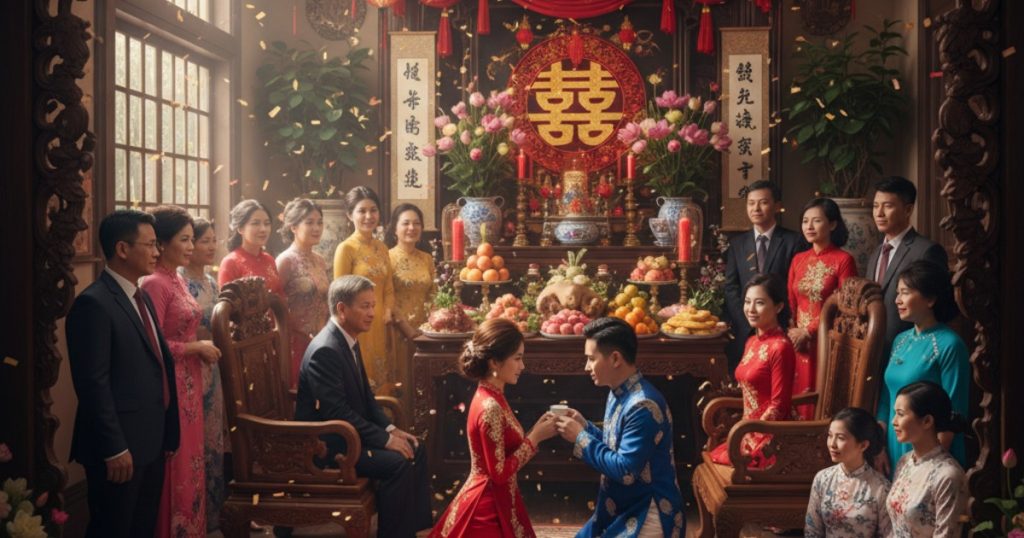
Embark on a journey through the enchanting world of Vietnamese wedding customs, where ancient traditions blend seamlessly with modern celebrations. These customs are rich in symbolism, reflecting the deep cultural values and familial bonds that define Vietnamese society. Understanding these beautiful rituals can enrich your wedding experience and honor your heritage.
The Engagement Ritual in Vietnamese Wedding Customs
The engagement ceremony, known as Le Dinh Hon, is a formal and significant event. It marks the official agreement between two families for their children to marry. This ceremony is typically held at the bride’s home and involves a series of meaningful rituals found in Vietnamese wedding customs.
Family Introductions and Proposal
The groom’s family travels to the bride’s home with elaborately prepared gifts. Upon arrival, both families formally introduce themselves. The groom’s representative then formally asks for the bride’s hand in marriage. This stage is a vital part of starting the formal Vietnamese wedding customs between the two clans.
Exchanging Gifts and Seeking Blessings
Once the proposal is accepted, the groom’s family presents gifts like betel and areca nuts, fruits, and wine. These items symbolize prosperity and the sweet bond of marriage. The couple then offers incense at the ancestral altar. This ceremony solidifies the commitment, setting the stage for future Vietnamese wedding customs.
The Traditional Wedding Day and Le Cuoi Rituals
The wedding day, or Le Cuoi, is a joyous affair filled with specific rituals that honor tradition. These ceremonies often involve multiple stages, making Vietnamese wedding customs truly unique and memorable for the guests and the couple.
The Procession to the Bride’s House
On the wedding day, the groom and his family form a procession to the bride’s house. They carry gifts in red lacquered boxes. This procession is a vibrant spectacle that highlights the festive nature of Vietnamese wedding customs. Traditional music often accompanies the group as they arrive at the destination.
The Sacred Ancestor Worship Ceremony
Upon reaching the home, the groom’s family is welcomed inside. The most sacred part is the ancestor worship ritual at the bride’s family altar. The couple lights incense and prays to the ancestors to inform them of the marriage. This ritual underscores the importance of heritage in all Vietnamese wedding customs.
The Tea Ceremony and Family Respect
Following the worship, a tea ceremony takes place. The bride and groom serve tea to their parents and elders. In return, the elders offer words of wisdom and gifts like jewelry or money. This interaction is a cherished part of Vietnamese wedding customs that strengthens the bond between the new relatives.
Iconic Attire Found in Vietnamese Wedding Customs
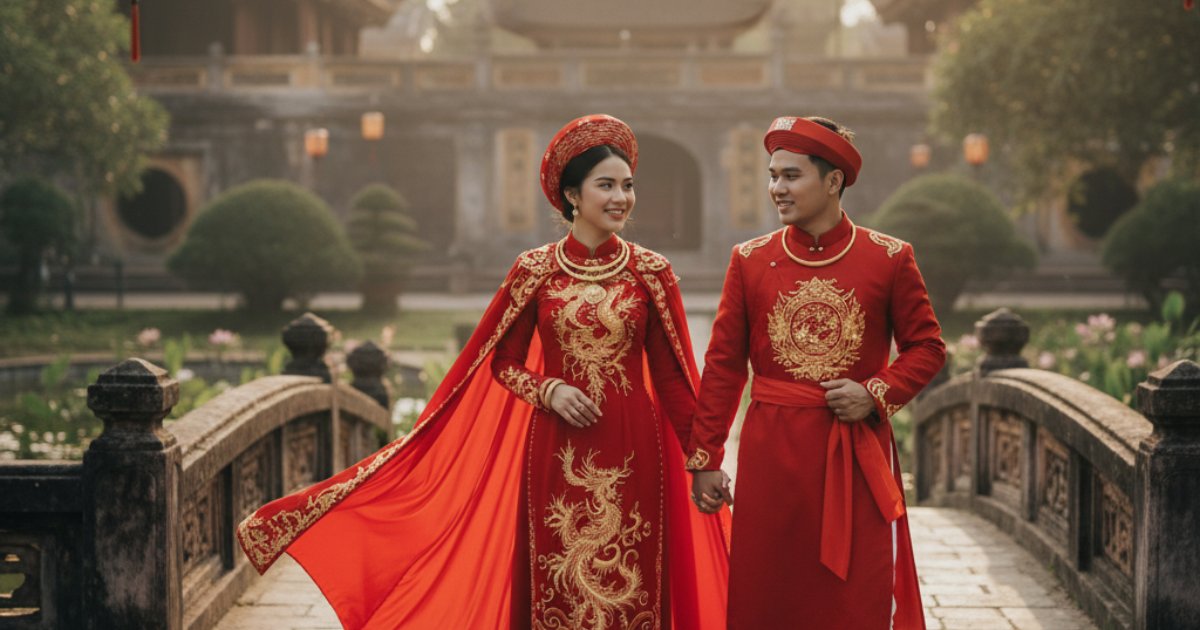
Traditional attire plays a pivotal role in Vietnamese wedding customs, showcasing the country’s rich culture through elegant garments. These outfits are not merely clothes but embody history and the significance of the wedding day.
The Elegant Ao Dai for Brides and Grooms
The most iconic garment for these celebrations is the Ao Dai. Brides traditionally wear a red Ao Dai to symbolize luck, while modern brides may choose white for purity. Grooms also wear an Ao Dai to reflect elegance and respect. The Ao Dai remains a timeless representation of identity in Vietnamese wedding customs.
Regional Styles and Headpieces
While the Ao Dai is primary, some families incorporate other garments like the Nhat Binh dress or elaborate headpieces. Each piece of attire contributes to the splendor and cultural depth of Vietnamese wedding customs, making the couple stand out during the traditional rites.
Symbolism and Deeper Meanings in Vietnamese Wedding Customs
Every ritual and item within Vietnamese wedding customs carries deep symbolic meaning. These core values include family honor, fertility, and marital harmony, which are celebrated throughout the event.
The Symbolic Betel and Areca Nuts
Betel leaves and areca nuts are indispensable in Vietnamese wedding customs. They symbolize fidelity and the inseparable bond between husband and wife. These items are always present to initiate formal marriage discussions and proposals.
Colors and Prosperity Symbols
Colors in Vietnamese wedding customs are highly symbolic. Red is the most prominent color, representing luck and happiness. Gold signifies wealth and luxury. These colors are found in the clothing, decorations, and gift boxes, contributing to the visual richness of the Vietnamese wedding customs.
Modern Trends and Preserving Vietnamese Wedding Customs
As society evolves, so do Vietnamese wedding customs. Many couples today seek to honor tradition while also incorporating contemporary elements that reflect their personal style.
Blending Tradition with Modern Celebrations
Modern weddings often feature a fusion of traditional rituals with Western influences. Couples might have a traditional tea ceremony followed by a Western-style reception. This approach allows them to celebrate their heritage within the framework of Vietnamese wedding customs while enjoying modern comforts.
Custom Wedding Attire for Traditional Rites
A significant trend is the desire for custom-designed attire. Brides often want an Ao Dai that blends traditional aesthetics with contemporary design. At Cees Bridal, we help brides express their individual style while paying homage to Vietnamese wedding customs. Custom tailoring ensures a perfect fit for these sacred ceremonies.
Cees Bridal Contact Information
- Hotline/Zalo: +84 378 220 630
- Website: https://ceesbridal.com/
- Fanpage: https://www.facebook.com/CeesBridal/
- Address: 16/8 Dang Van Ngu, Phu Nhuan District, Ho Chi Minh City, Vietnam
- Support Partner: https://ma.id.vn/
Custom Wedding Dress Design At CeesBridal is a professional service for brides who want a unique and perfectly fitted gown. CeesBridal specializes in Vietnamese bridal fashion, offering elegant and detailed dresses for both local and international customers.
